Project Description
In 2012, Foundex was awarded an initial contract by Public Works Canada (PWC) to drill and install a relief well to gain control of the historic Coldstream Ranch Well (CRW) artesian well located in Coldstream, British Columbia. The artesian well had been flowing uncontrollably since the 1950s, with discharged flows estimated to be in excess of 3,000 US GPM and pressures estimated at over 30 PSI. The uncontrolled water flow created sinkholes over 12 metres in diameter, with washout depths of up to 24 metres recorded. Multiple failed attempts were made in previous decades to shut in or control the artesian well. The well was left to flow into a cistern, which eventually resulted in the formation of a nearby surface water feature. Over time, the well began producing fines, indicating deterioration and the need for a permanent closure solution.
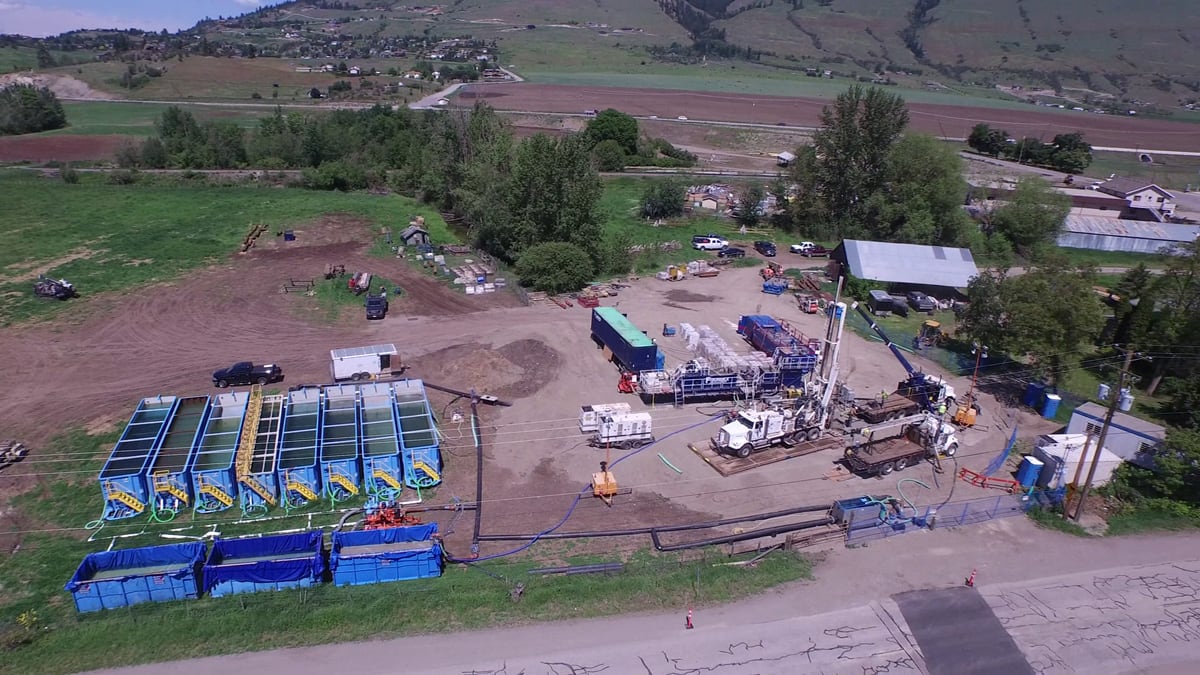
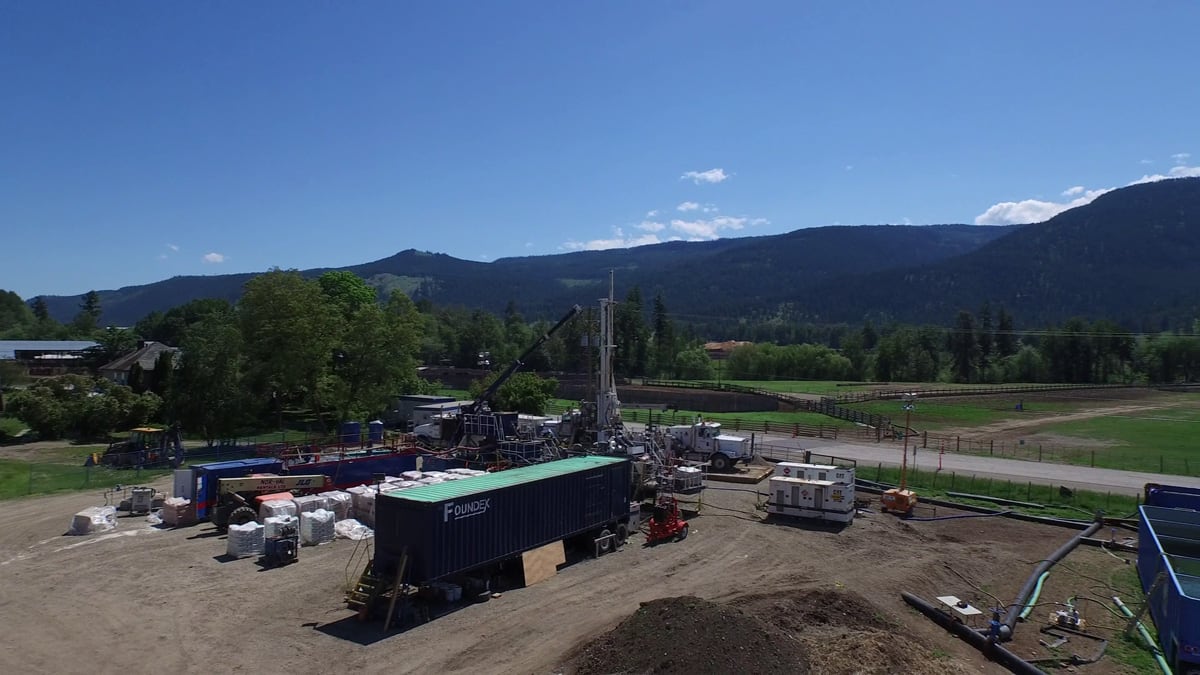
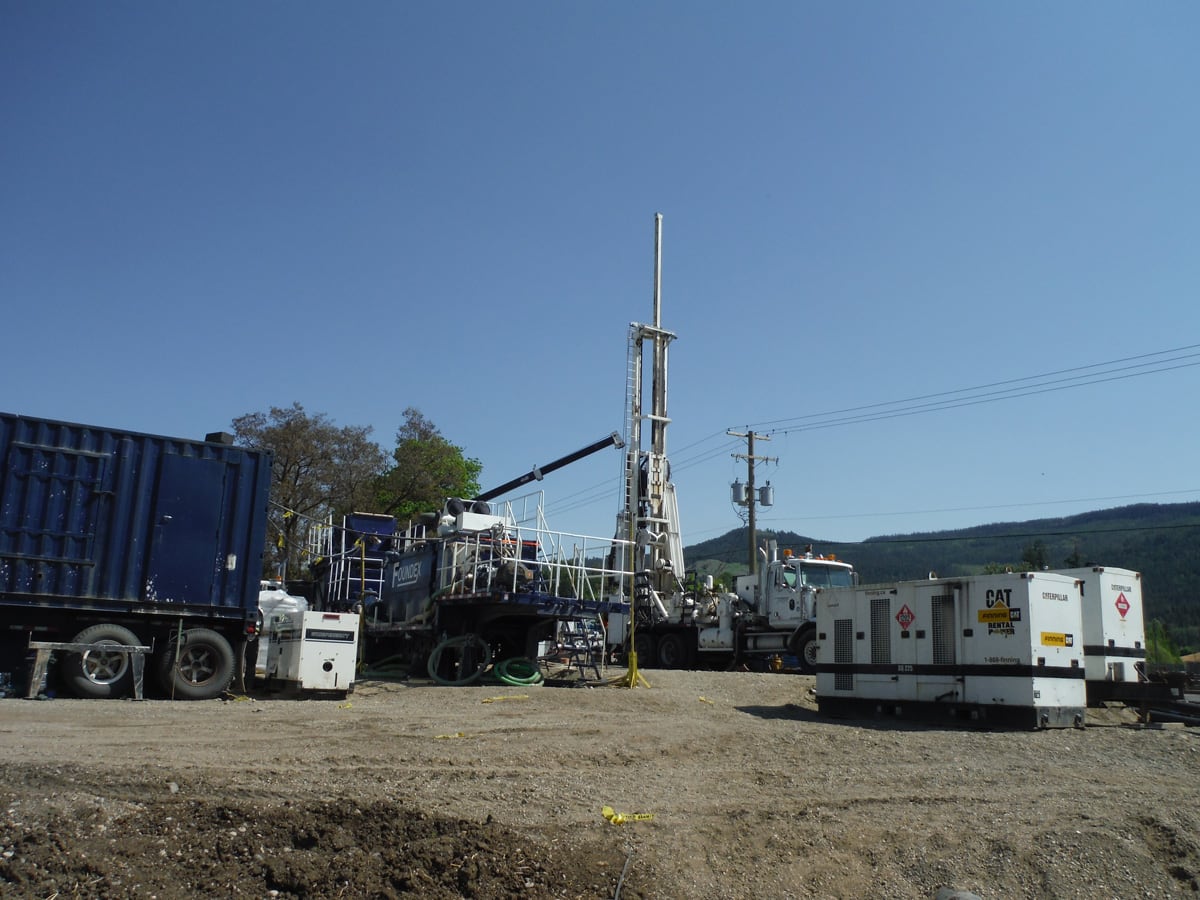
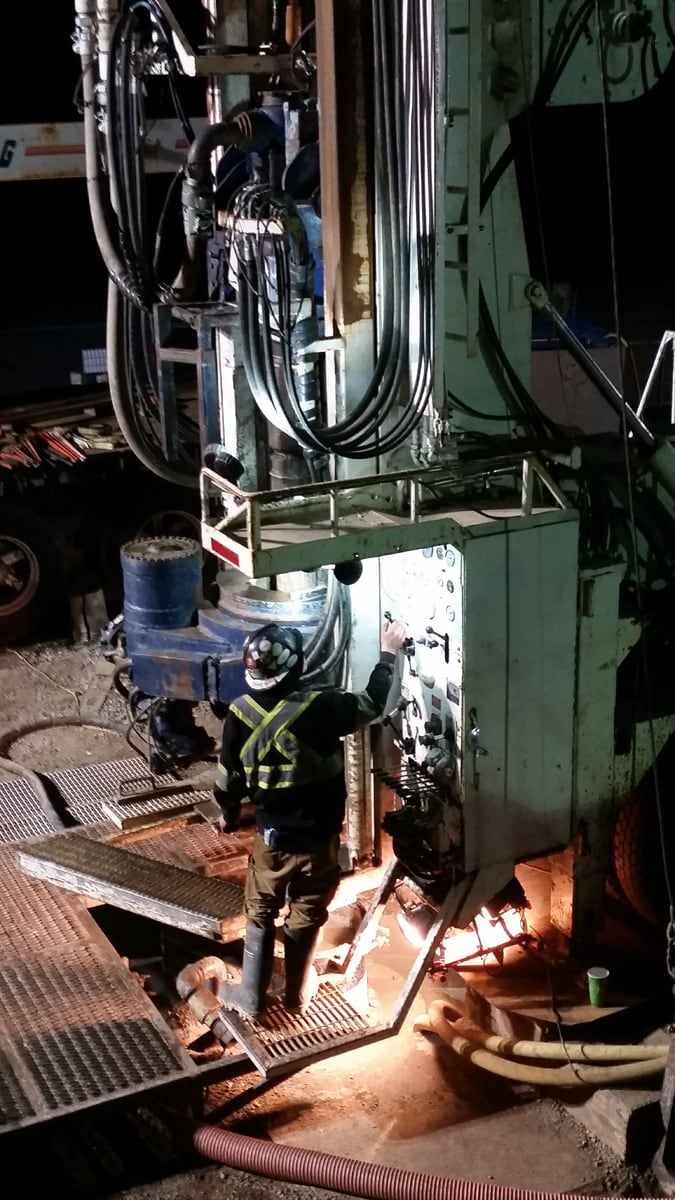
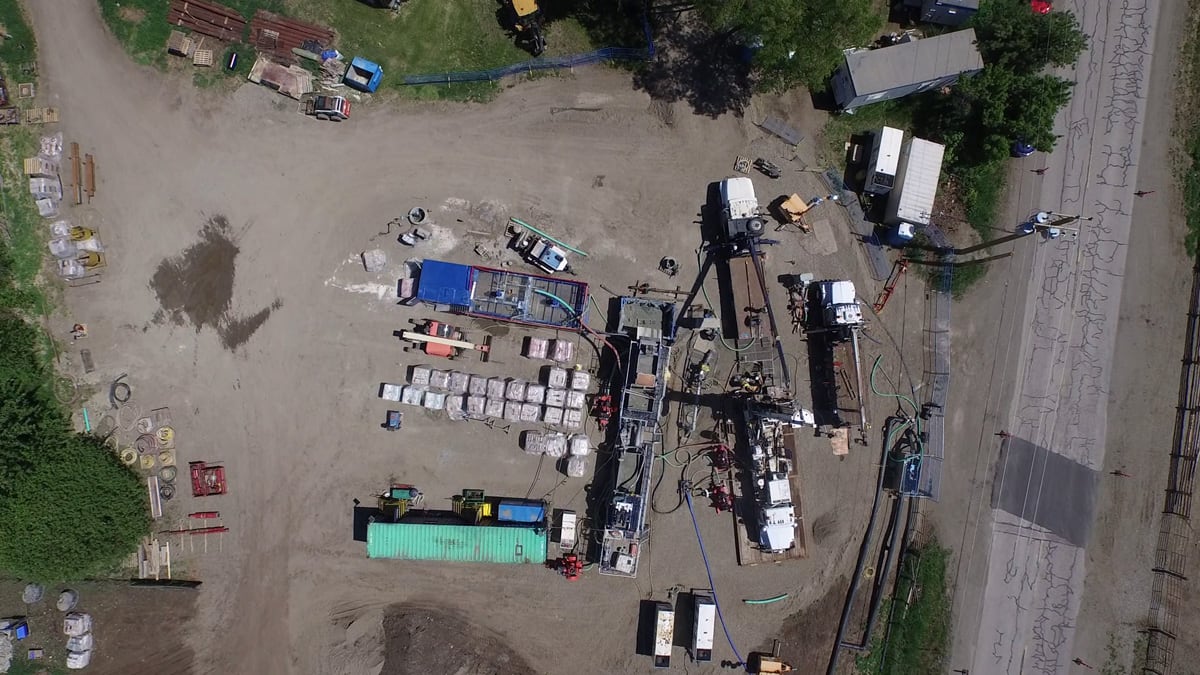
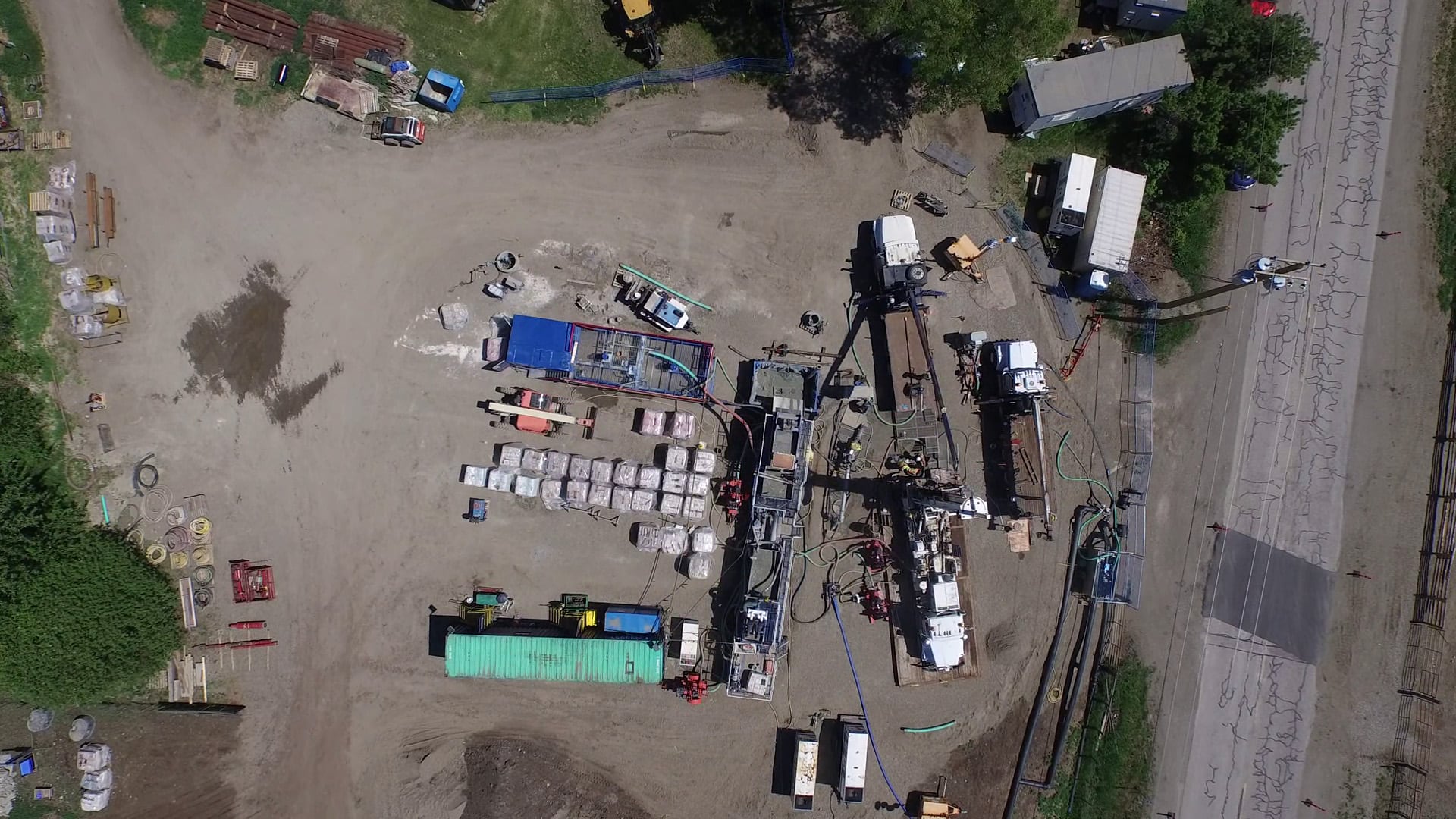
The relief well was a telescopic design, starting with a 508‑mm‑diameter surface casing, a 406‑mm‑diameter intermediate casing string, and a 305‑mm‑diameter production string. The well was drilled using mud rotary techniques with a modified Foremost DR‑24 drill, along with a large‑volume drill mud recycling system, high‑capacity pumps, and an oilfield premix tank. The high‑capacity mud system facilitated the delivery of high‑density drilling muds to overcome underlying formation pressure and support the installation of permanent steel casing.
Each casing string was cemented into place using oilfield techniques and equipment. The cemented casing strings were evaluated using a wireline cement bond logging tool and pressure‑tested for formation integrity prior to drilling into the underlying high‑pressure basal aquifer. A custom‑designed inflatable hydraulic overshot packer and well screen assembly, manufactured in Australia, was used. The screen assembly was installed to depth to optimize flow and allow for a controlled fluid installation into the aquifer.
Foundex implemented onsite procedures to maintain control of the formation, with redundant systems in place to manage flows in the event of an unforeseen occurrence.
In 2013, Foundex proposed a methodology to PWC to abandon and seal the historic artesian well. This approach was approved by PWC, and Foundex was awarded the second phase of work to complete the project.
The abandonment procedure involved a water‑management system that allowed for control of the aquifer using the relief well drilled in 2012, an existing small‑diameter relief well, and a community well located nearby on an adjacent property. Using these wells, the basal aquifer was drawn down to support the abandonment process.
The initial step involved drilling a series of holes into the aquitard around the artesian well using the DR‑24 and an HT‑750 top‑drive drill. Holes were drilled in a perimeter grid, and low‑mobility grout was injected under high pressure to depths of approximately 27 meters. This approach provided compaction and confinement of the soil around the perimeter of the surface casing of the CRW artesian well.
Once grout installation was complete, the DR‑24 was set up over the CRW artesian well, and downhole tooling and casing jacks were used to fish, free, and extract the 406‑mm‑diameter well screen to surface. The 406‑mm‑diameter production casing had become severely corroded, and a methodology was developed and implemented to free and remove the casing string. A custom‑designed dual‑wall bottom‑hole assembly (BHA), over 16 meters in length, was advanced into the aquifer using mud rotary techniques below the 30‑inch surface casing. Low‑mobility grout was pumped through the BHA, compacting the formation around the hole. As grout was placed under pressure, the BHA was withdrawn using casing jacks and the lower drive on the DR‑24, and the hole was successfully backfilled with low‑mobility grout into the 762‑mm‑diameter casing.
Once the aquifer was sealed with low‑mobility grout, the surface casing (762‑mm‑diameter) of the formerly artesian well was perforated, and permeation grout was pumped through the perforations into the surrounding formation. The remainder of the well was grouted to surface with a Portland cement mix.
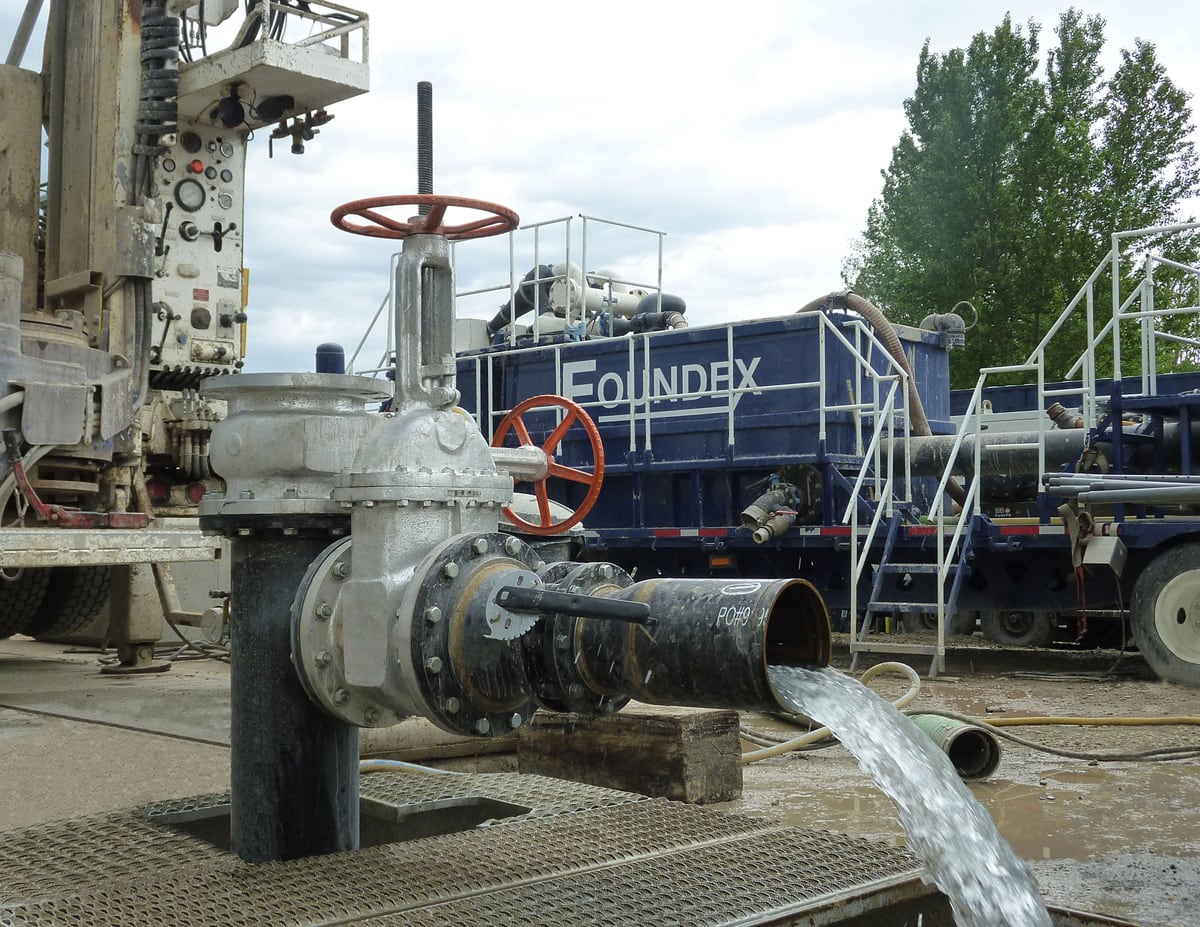
Once abandonment of the former CRW artesian well was completed, the relief well was tested and found to flow freely at a rate of over 750 US GPM, with a shut‑in pressure of approximately 45 PSI. The relief well remains in operation, and the Coldstream Ranch currently maintains and operates it for irrigation and water supply.