Project Description
In 2015, Foundex was retained to complete the drilling of rock anchor holes for a dam intake structure in British Columbia. The project required precision‑drilled anchor holes with a finished diameter of 305 mm and strict control of vertical deviation to meet the engineering specifications for the structure.
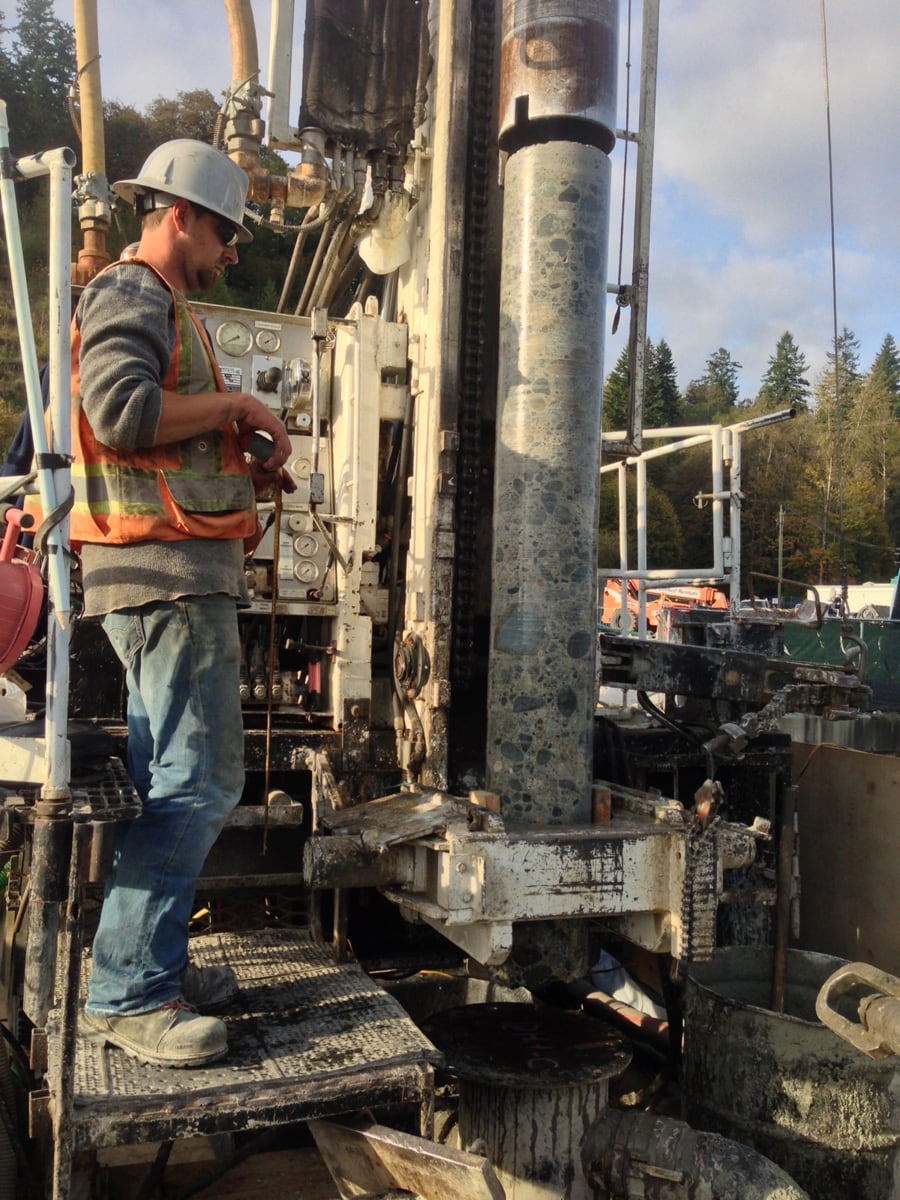
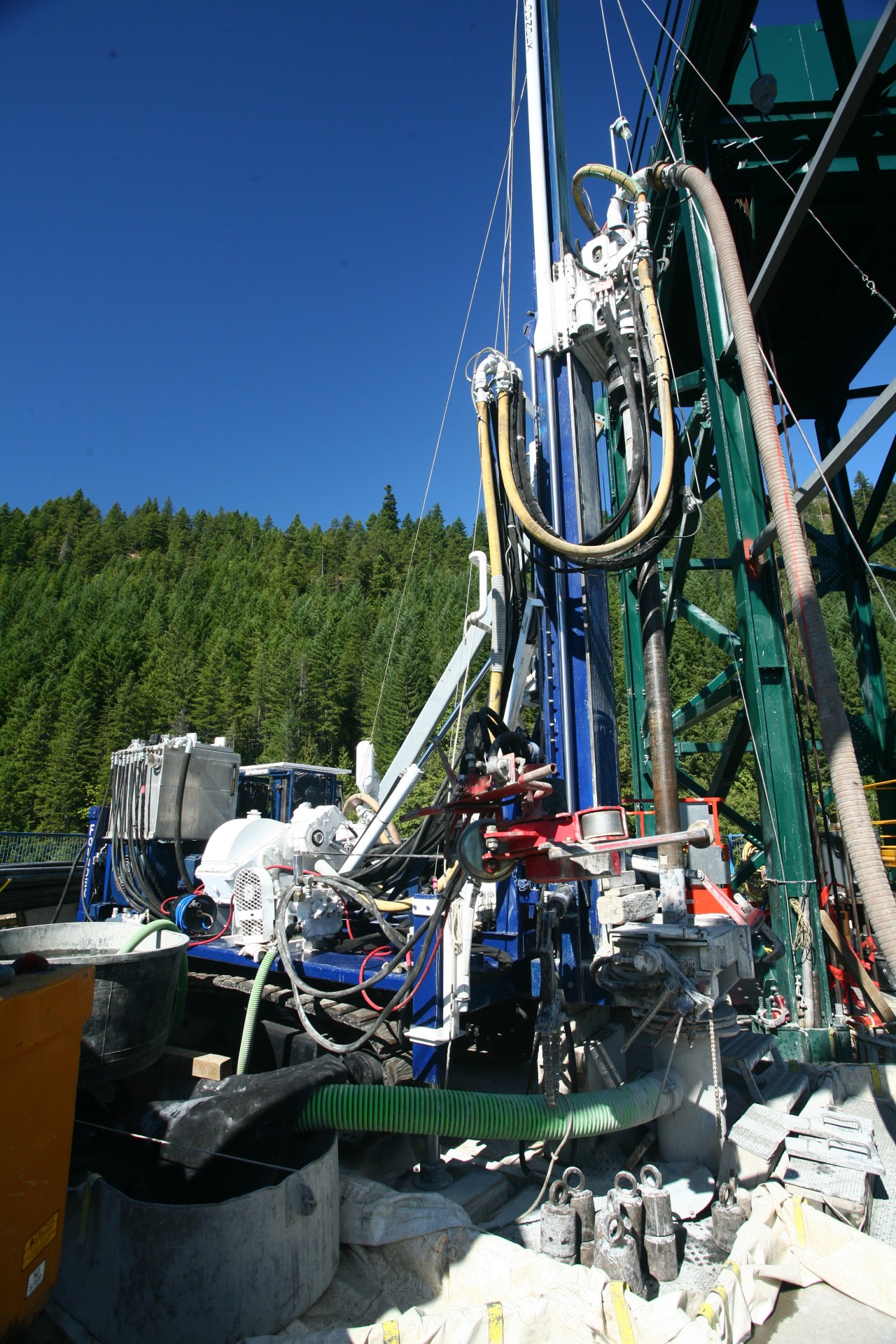
To achieve the required accuracy for vertical alignment, Foundex first advanced NQ inverted‑pendulum pilot holes, checking deviation after every core run using an inverted pendulum to ensure alignment remained within the allowable 25‑mm tolerance. The pendulum system allowed for realignment and correction of vertical position within the core hole. Hole deviation was corrected within the radial limits of the pendulum system. Once each NQ pendulum pilot hole met the required positional criteria, a custom‑built 305‑mm‑diameter core barrel with a pilot stinger was advanced over the pilot hole and drilled to target depth in 1.5 m runs, with core recovered using custom‑built wedge and wireline retrieval assemblies. Once bedrock was reached, the hole was advanced using a 305 mm down‑the‑hole hammer and reverse‑circulation methods, creating the final anchor hole to target depth.
Following drilling, a high‑pressure pump fitted with a self‑rotating wash nozzle was lowered into the completed hole using a hydraulic line. This allowed thorough cleaning of the borehole walls, removing accumulated cuttings and residual material from drilling. Custom flooded suction systems were deployed to remove any solids collected at the bottom of the hole, after which a submersible pump was placed to pump the hole dry. A downhole camera survey was then conducted to evaluate borehole conditions and identify any potential issues requiring attention.
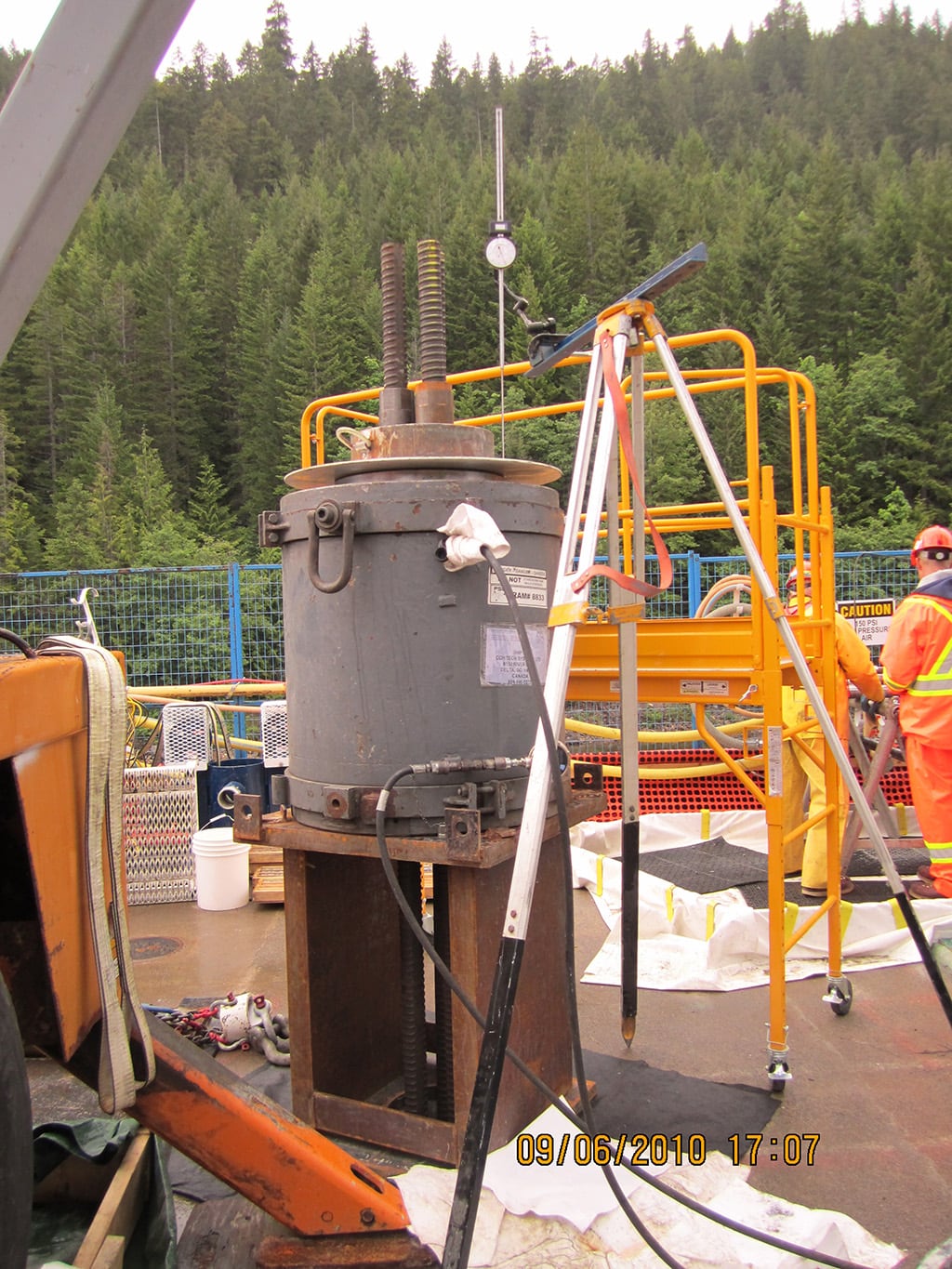
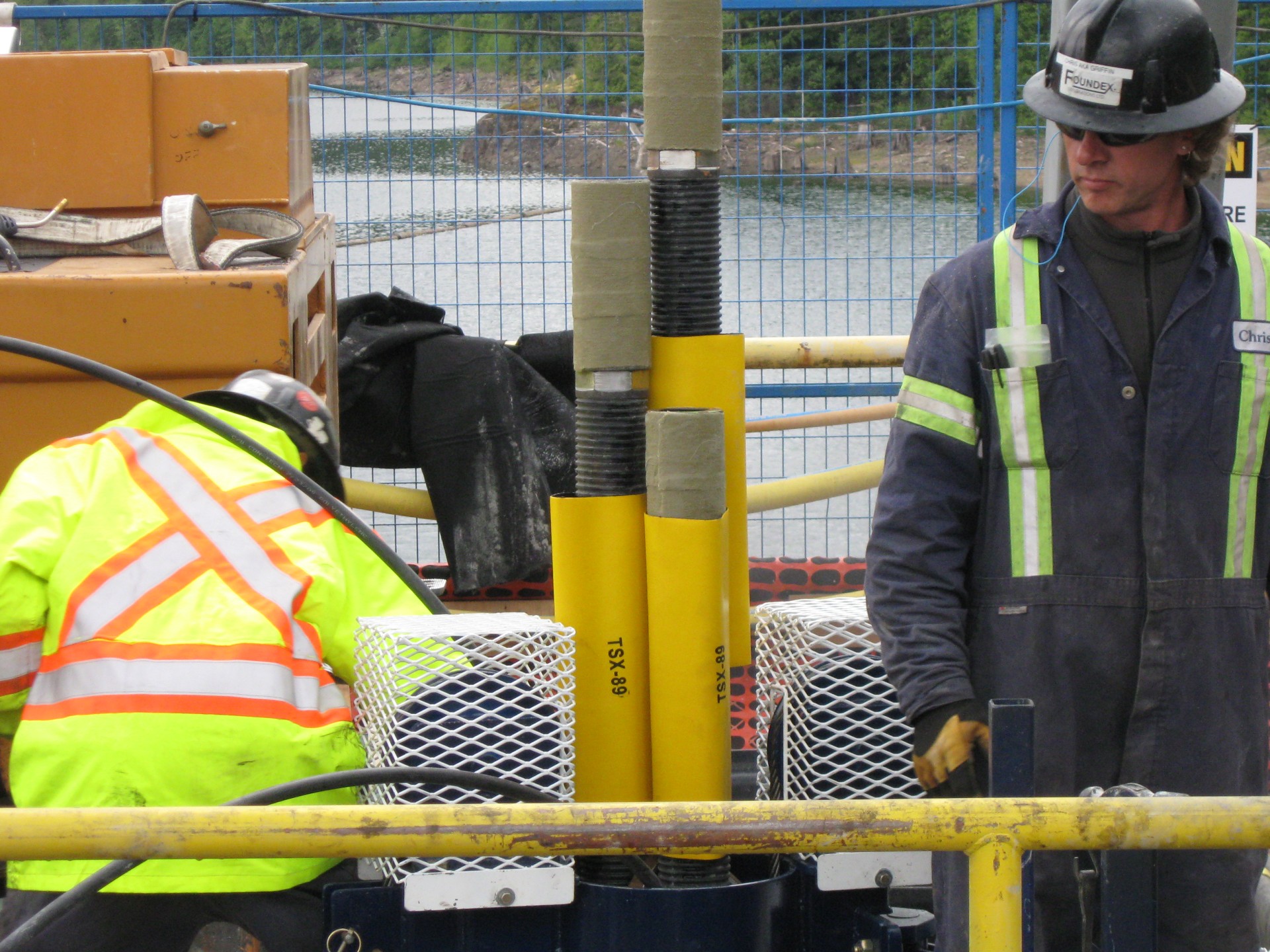
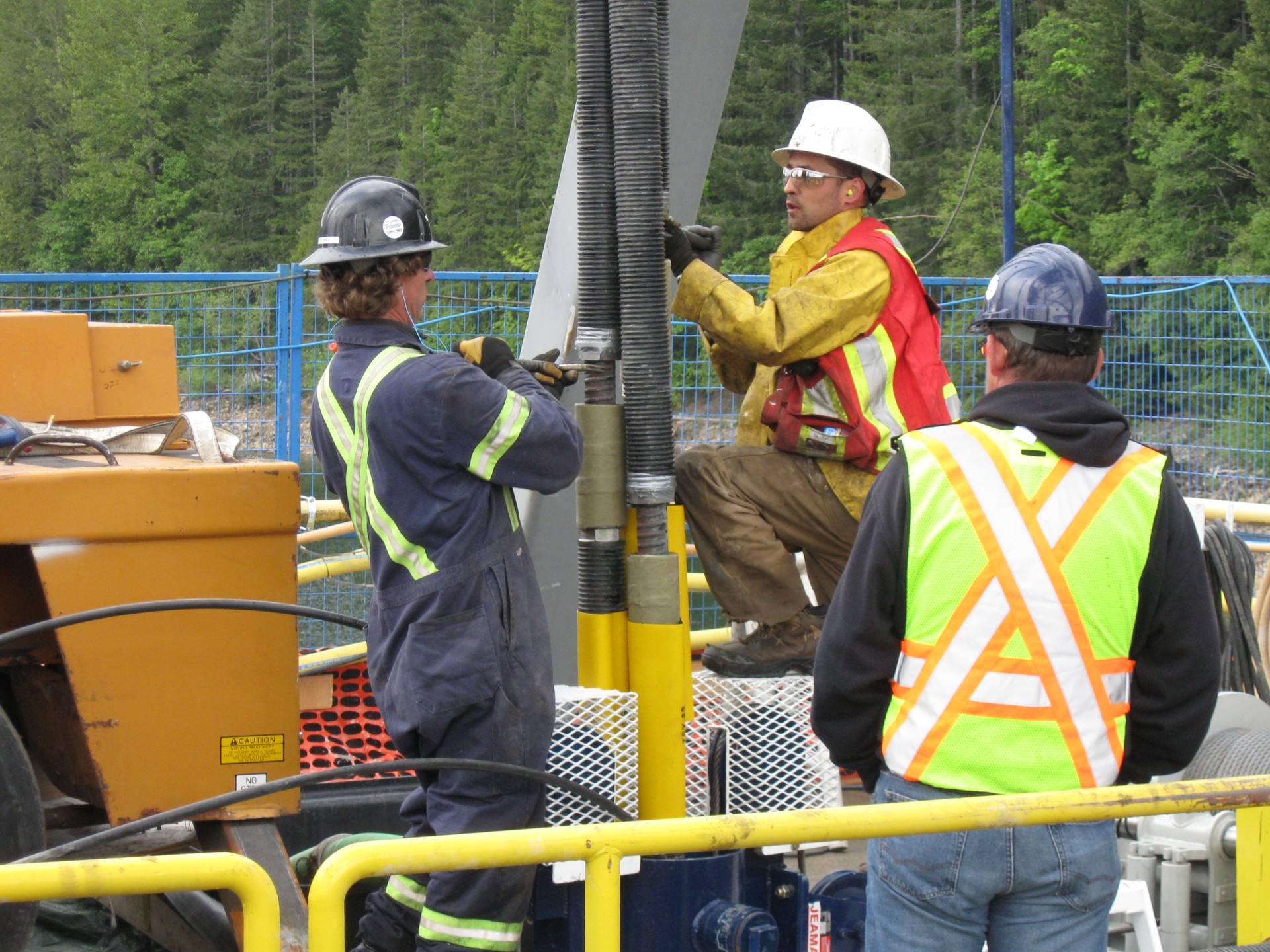
The final stage of the work involved water testing using a pneumatic packer set at selected test intervals. Water was injected into the interval to evaluate whether fractures or discontinuities required sealing. If injected volumes exceeded the specified threshold, the hole was consolidation grouted, redrilled after 18 hours, and the cleaning and testing sequence was repeated until the required level of confinement was achieved. Upon meeting water‑testing criteria, triple‑bar, double corrosion‑protected anchor assemblies were installed in each hole. A custom‑engineered winch system and installation frame was fabricated to support installation of the anchor assemblies in conjunction with a mobile crane, while working alongside two active drill rigs and existing infrastructure on a confined work platform. The project was completed on schedule and on budget.